
Professional Development
Sorry, we couldn't find any posts. Please try a different search.
Safe Sport
Creating a culture where everyone can thrive is a shared responsibility. Safe Sport Training was developed to help anyone involved in sport — whether you have direct contact with athletes or work in the background — to promote physical, psychological, and social health, in line with the Universal Code of Conduct to Prevent and Address Maltreatment in Sport.
Since the launch of the Safe Sport initiative, Canadian sport organizations have excelled in delivering on their promise to create a safe and welcoming environment. SIRC highlights some of the best Safe Sport policies and practices adopted across the country.
What will I learn?
Acknowledgement
Understand that everyone has a role to play in keeping sport safe, how the misuse of power leads to maltreatment, and the principles of the Universal Code of Conduct.
Awareness
Learn about the various types of maltreatment, the conditions that enable them, and how to recognize signs that they may be happening.
Action
Find out what to do if you suspect maltreatment, and how you can create a culture that protects all participants. To take the training, visit: Safe Sport Training
Record Checks

Located in Charlottetown, C5 ID and Fingerprinting Solutions Inc. is accredited by Canadian Police Services to offer Criminal Background Checks in Canada. Our many years of experience in this field will ensure that you receive the precise services you require in order to obtain your Criminal Record Check, whether by fingerprints or just a name and date of birth check on the RCMP maintained, National Repository for Criminal Records in Canada.
Rule of Two
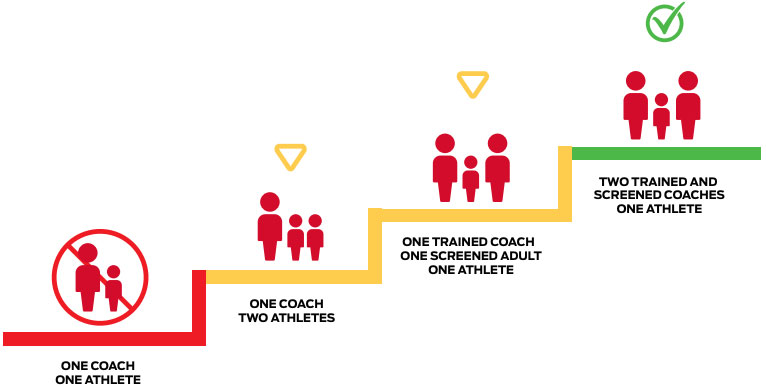
Virtual or Online
The Coaching Association of Canada has prepared additional information to support sport organizations, coaches, parents/guardians and participants with implementing the Rule of Two for training in a virtual/online environment.
Policy Guidance for Trans Participants in Sport
Sport PEI supports the inclusion of trans athletes, coaches, officials in sport and recommends to our members to follow the guidance provided by the Canadian Centre for Ethics in Sport - Creating Inclusive Environments for Trans Participants in Canadian Sport
In summary, the Expert Working Group provided the following policy guidance:
Individuals participating in developmental and recreational sport, that is LTAD stages Active Start, FUNdamentals, Learn to Train, Train to Train, Train to Compete (until international federation rules apply) and Active for Life, should be able to participate in the gender with which they identify and not be subject to requirements for disclosure of personal information beyond those required of cisgender athletes. Nor should there be any requirement for hormonal therapy or surgery.
Hormone therapy should not be required for an individual to participate in high-performance sport, that is LTAD stages Train to Compete (once international federation rules become a factor) and Train to Win, in the gender consistent with their gender identity, unless the sport organization can provide evidence that hormone therapy is a reasonable and bonafide requirement.
Individuals should not be required to disclose their trans identity or history to participate in high-performance sport, that is LTAD stages Train to Compete (once international federation rules become a factor) and Train to Win, unless there is a justified reason requiring them to do so.
Surgical intervention should not be required for an individual to participate in high-performance sport, that is LTAD stages Train to Compete (once international federation rules become a factor) and Train to Win, in the gender category that is consistent with their gender identity.
Canadian Sport Helpline
The Canadian Sport Helpline, funded by the Government of Canada, is a listening and referral service monitored by live operators from 8 am to 8 pm Eastern time, 7 days a week. Users will have a choice of communicating via a toll-free phone line, email, text or live chat, in the official language of their choice.